
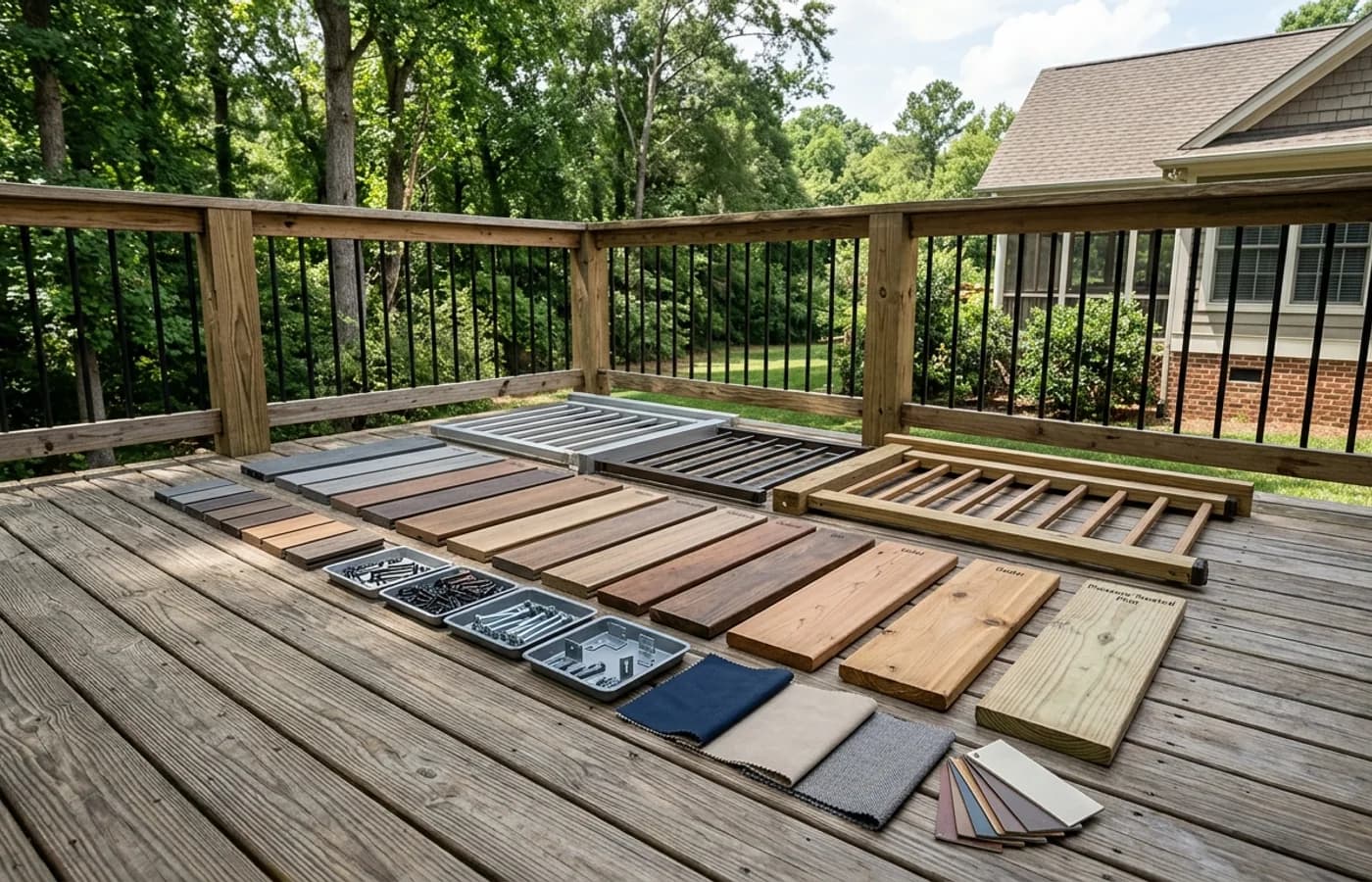
Composite decking is often the best low-maintenance choice for North Carolina homeowners, but pressure-treated wood still makes sense when budget is the top priority. The right answer depends on sun, shade, moisture, maintenance expectations, and how polished you want the finished deck to feel.
North Carolina is tough on decks. Heat, humidity, pollen, rain, and shaded yards all matter. A deck that looks good on day one can age quickly if the material choice does not match the site.
Before choosing boards, think about how you actually live outside.
Pressure-treated wood
Pressure-treated wood is common because it is affordable and familiar. It can be a good option for homeowners who want a functional deck and are comfortable with maintenance.
The tradeoff is upkeep. Wood needs cleaning, staining or sealing, and attention over time. Boards can cup, crack, splinter, or fade if they are neglected.
If the deck is a starter project or the budget is tight, wood may be the right move. But if you want a more finished outdoor room, compare the lifecycle cost against composite.
Composite decking
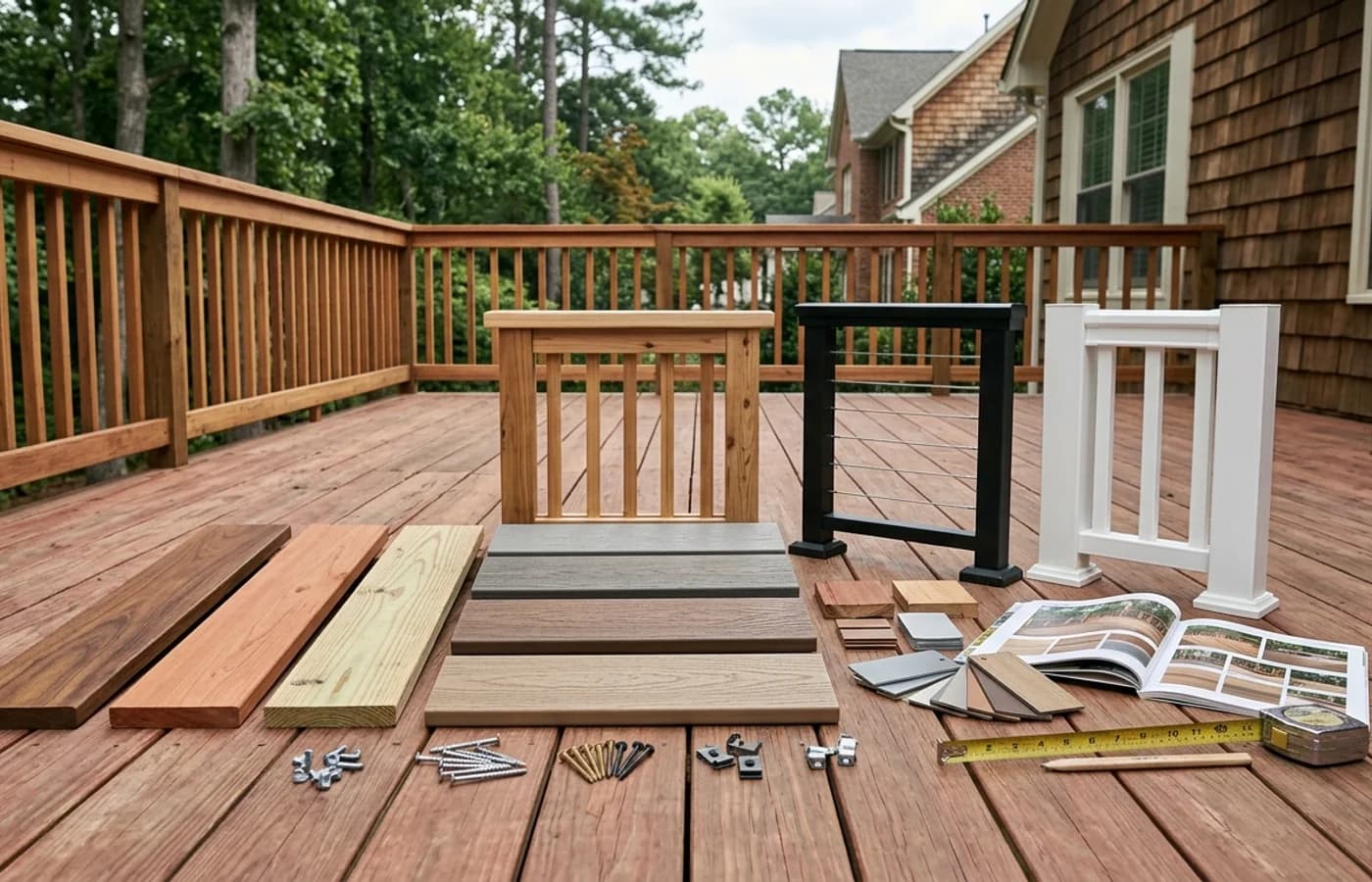
Composite decking costs more upfront, but it reduces maintenance. It does not need staining like wood, and many homeowners like the cleaner finished look.
In sunny areas, color and heat retention matter. Some boards get hotter than others. In shaded areas, moisture and airflow still matter even with composite.
Composite pairs well with larger decks and patios projects because homeowners usually want a finished outdoor living space, not just a platform.
Railings and trim matter too
Deck material is not only the walking surface. Railings, posts, stairs, fascia, skirting, lighting, and trim change the look and durability of the project.
A simple wood deck with basic rails feels different from a composite deck with clean railing lines and integrated lighting. Both can be right. They just serve different goals.
If your deck connects to a screened porch, choose materials that make the whole outdoor space feel intentional.
What about patios?
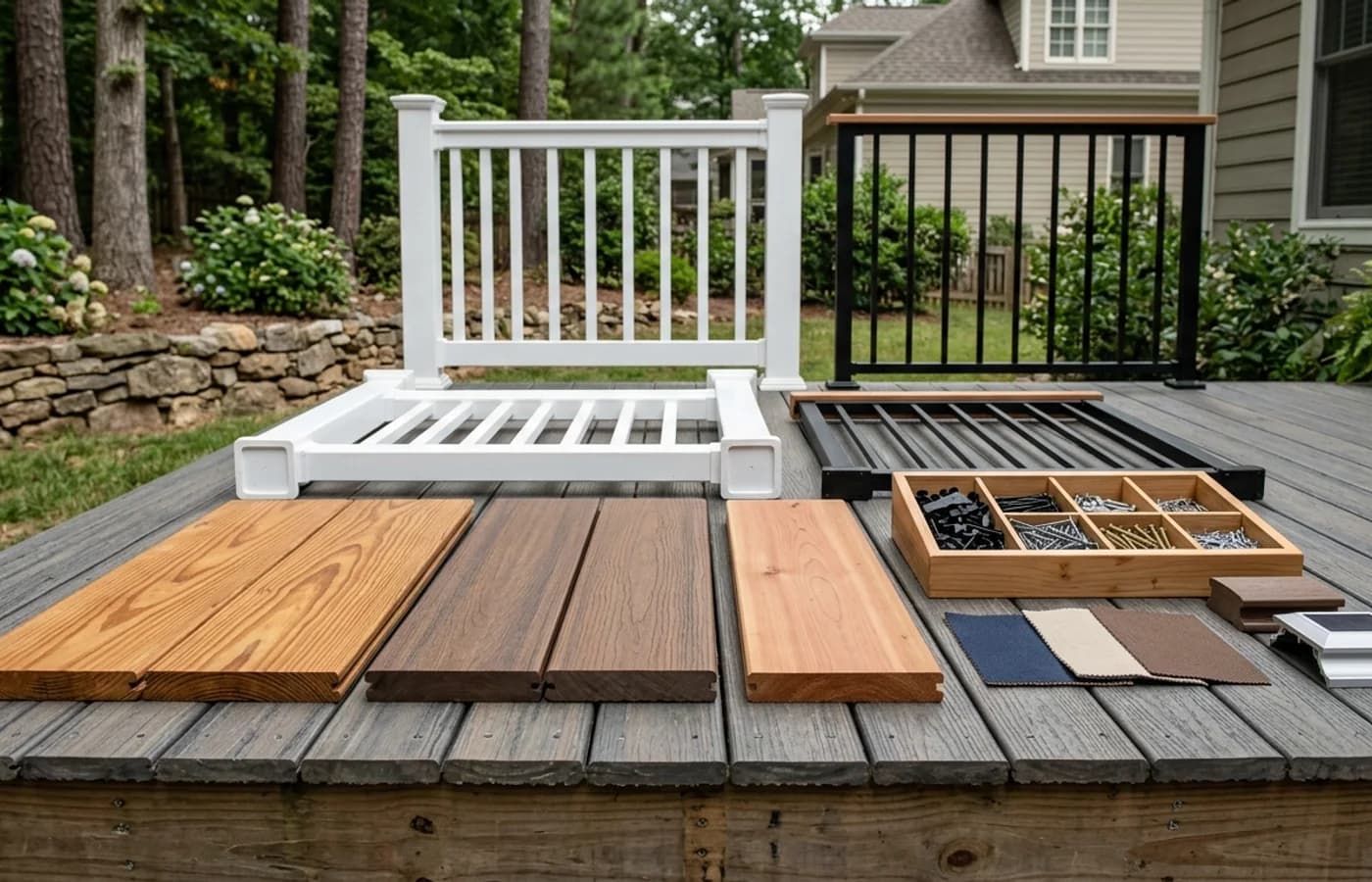
Patios can be a better fit when the yard grade supports them. They avoid some elevated-deck maintenance and can create a strong entertaining area.
But patios need good drainage, base prep, and layout planning. In North Carolina clay soils, water management is a real detail, not an afterthought.
Many homeowners end up with a combination: deck for house-level access, patio for grilling or seating, and a screened porch or sunroom for covered use.
Does material affect permits?
Material choice alone may not decide permitting, but the structure does. Height, attachment to the house, stairs, guards, and structural changes matter more.
Read Do You Need a Permit for a Deck in Raleigh NC? before assuming your project is simple.
How should you choose?
Choose wood if budget is the main concern and you are comfortable maintaining it. Choose composite if you want lower maintenance, a cleaner finish, and stronger long-term convenience.
Then look at the site. Is it shaded? Full sun? Wet? Sloped? Close to trees? Used by kids or pets? Those details should guide the final decision.
Bottom line
The best deck material in North Carolina is the one that matches the home, the site, and the homeowner's tolerance for maintenance.
Build Moore Exteriors helps homeowners in Durham, Raleigh, Hillsborough, Chapel Hill, and nearby Triangle communities design outdoor living spaces that make sense long after the first summer. Schedule a free estimate and we will walk through wood, composite, railing, patio, and porch options together.